
Epidural injections deliver anti-inflammatory medication directly into the epidural space surrounding the spinal cord and nerve roots. They are among the most commonly performed interventional pain procedures and are a cornerstone treatment for spine-related pain.
Using advanced fluoroscopic imaging guidance, our specialists target the exact source of discomfort for faster, more focused relief. This approach reduces the need for systemic medications and helps many patients avoid surgical intervention.
Whether you are dealing with herniated discs, spinal stenosis, sciatica, or chronic back and neck pain, our team is committed to building a personalized care plan that supports your recovery and long-term comfort.
APPOINTMENTS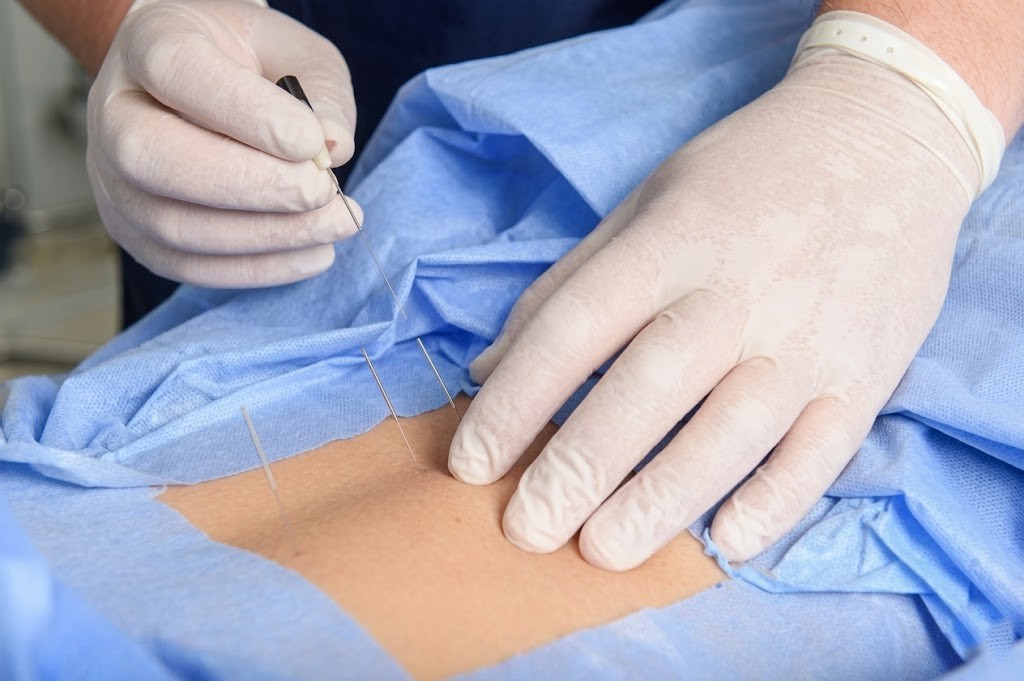
A lumbar interlaminar epidural steroid injection delivers corticosteroid medication into the epidural space of the lower back through a midline approach between the vertebrae. This technique allows the medication to spread across a broader area, reducing inflammation around multiple nerve roots simultaneously.
Conditions commonly treated include lumbar radiculopathy (sciatica), herniated discs in the lower back, lumbar spinal stenosis, degenerative disc disease, and post-laminectomy syndrome (failed back surgery syndrome).
The procedure takes 15-30 minutes under fluoroscopic guidance. Contrast dye is injected to confirm proper placement before medication delivery. Pain relief typically begins within 2-7 days and lasts 3-6 months.
Learn MoreA transforaminal epidural steroid injection (TFESI) is a more targeted approach that delivers medication directly to a specific nerve root as it exits the spine through the neural foramen. This precision makes it particularly effective for single-level radiculopathy affecting one nerve.
Conditions treated include sciatica with identifiable single-level nerve compression, lumbar herniated disc with radiculopathy, foraminal stenosis, and post-surgical radiculopathy.
This approach delivers a higher concentration of medication exactly where it is needed. Pain relief typically lasts 3-6 months, often with better outcomes than interlaminar for single-level pathology.
Learn MoreA cervical epidural steroid injection delivers anti-inflammatory medication into the epidural space of the neck to reduce inflammation around the cervical nerve roots. This treats pain, numbness, and weakness that radiates from the neck into the shoulders, arms, and hands.
Conditions commonly treated include cervical radiculopathy (pinched nerve in the neck), cervical herniated disc, cervical spinal stenosis, cervical degenerative disc disease, and cervical spondylosis with myelopathy.
Due to the sensitivity of the cervical region, particular precision is required. Contrast dye confirms safe needle placement before medication is injected. Pain relief typically begins within 3-7 days.
Learn MoreA thoracic epidural steroid injection targets the mid-back region of the spine, delivering corticosteroid medication to reduce inflammation around the thoracic nerve roots. While less common than cervical or lumbar epidurals, this procedure is valuable for mid-back pain and conditions affecting the thoracic spine.
Conditions treated include thoracic radiculopathy, thoracic herniated disc, thoracic spinal stenosis, post-herpetic neuralgia, and intercostal neuralgia.
The thoracic spine presents unique anatomical challenges due to the steep angle of the spinous processes and the relatively narrow epidural space. Contrast dye confirms safe placement before steroid and anesthetic are delivered.
Learn MoreA caudal epidural injection approaches the epidural space from the sacral hiatus — a natural opening at the base of the spine near the tailbone. This approach is particularly useful for patients with prior lumbar surgery, severe spinal stenosis, or conditions affecting multiple lower lumbar levels.
Conditions treated include failed back surgery syndrome, multi-level lumbar spinal stenosis, coccydynia (tailbone pain), and epidural fibrosis (scar tissue around nerves).
Because the spinal cord ends above this level, the caudal approach carries a lower risk of dural puncture. A larger volume of medication can be delivered, allowing it to spread upward and reach multiple nerve roots.
Learn MoreReducing Pain. Improving Function. Enhancing Quality of Life.
We specialize in advanced pain management solutions, offering minimally invasive treatments to help patients live pain-free and improve their quality of life.